
Building Strong Systems for the Next Generation.
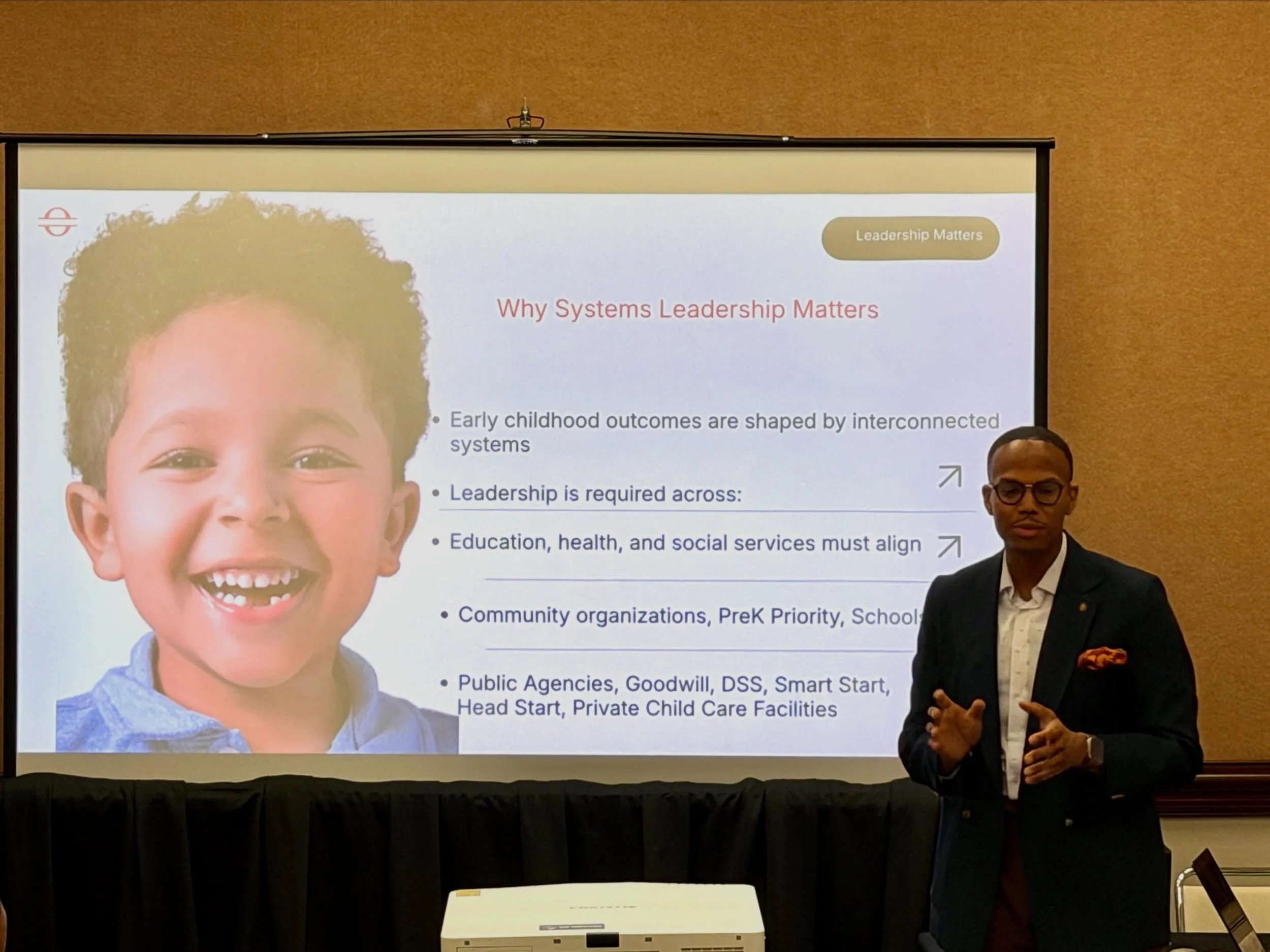
Systems do not become strong by accident.
They become strong through leadership, vision, discipline, and people willing to do the hard work of building with intention.
I was honored to present at the 2026 Smart Start Conference on “Building Strong Systems Leadership: Strategies to Strengthen Early Childhood Outcomes.”
This conversation mattered because early childhood education is not simply about classrooms.
It is about systems.
It is about leadership.
It is about how we create environments where children, families, educators, and communities can thrive together.
Too often, early childhood work is discussed only through the lens of care, curriculum, or access. Those things are deeply important, but they are also connected to something larger. Behind every strong classroom is a system that either supports or strains the people doing the work. Behind every thriving child is a network of adults, programs, policies, resources, and relationships that help shape their development.
That is why systems leadership matters.
Strong early childhood outcomes require more than good intentions. They require strategic collaboration, operational excellence, shared accountability, and people-centered leadership. They require leaders who can see the whole picture while still honoring the daily realities of children, families, teachers, administrators, and community partners.
During the session, we explored what sustainable leadership looks like in early childhood spaces. We discussed how leaders can strengthen organizational culture, align resources, support educators, build meaningful partnerships, and create systems that are not only responsive, but resilient.
Because the truth is, children do not experience programs in isolation.
They experience the strength or weakness of the systems around them.
When systems are fragmented, families feel it.
When educators are unsupported, classrooms feel it.
When leadership lacks vision, outcomes feel it.
But when systems are built with intention, everything begins to shift.
Families are better supported.
Educators are better equipped.
Children are better positioned to thrive.
Communities become stronger.
That is the work.
And it is not easy work.
It requires leaders who are willing to ask better questions, challenge old assumptions, and build structures that can last beyond a single program, a single funding cycle, or a single moment of urgency. It requires us to think not only about what is happening today, but about what kind of future we are preparing children to inherit.
I am grateful for every educator, administrator, advocate, and leader who was in the room and who continues to do this work every day. The future of our communities is being shaped right now in early childhood spaces, and that work deserves investment, visibility, and intentional leadership.
Early childhood education is community development.
It is workforce development.
It is family support.
It is leadership.
It is legacy work.
Thank you to the Smart Start team for the opportunity to contribute to such an important conversation. And thank you to my co-presenters, @dr.hinton and @iam_dr.frazier. We really do make a great team.
The systems we build today will shape the outcomes children carry tomorrow.
That is why we must build them strong.
