
Grateful, Challenged, Inspired.
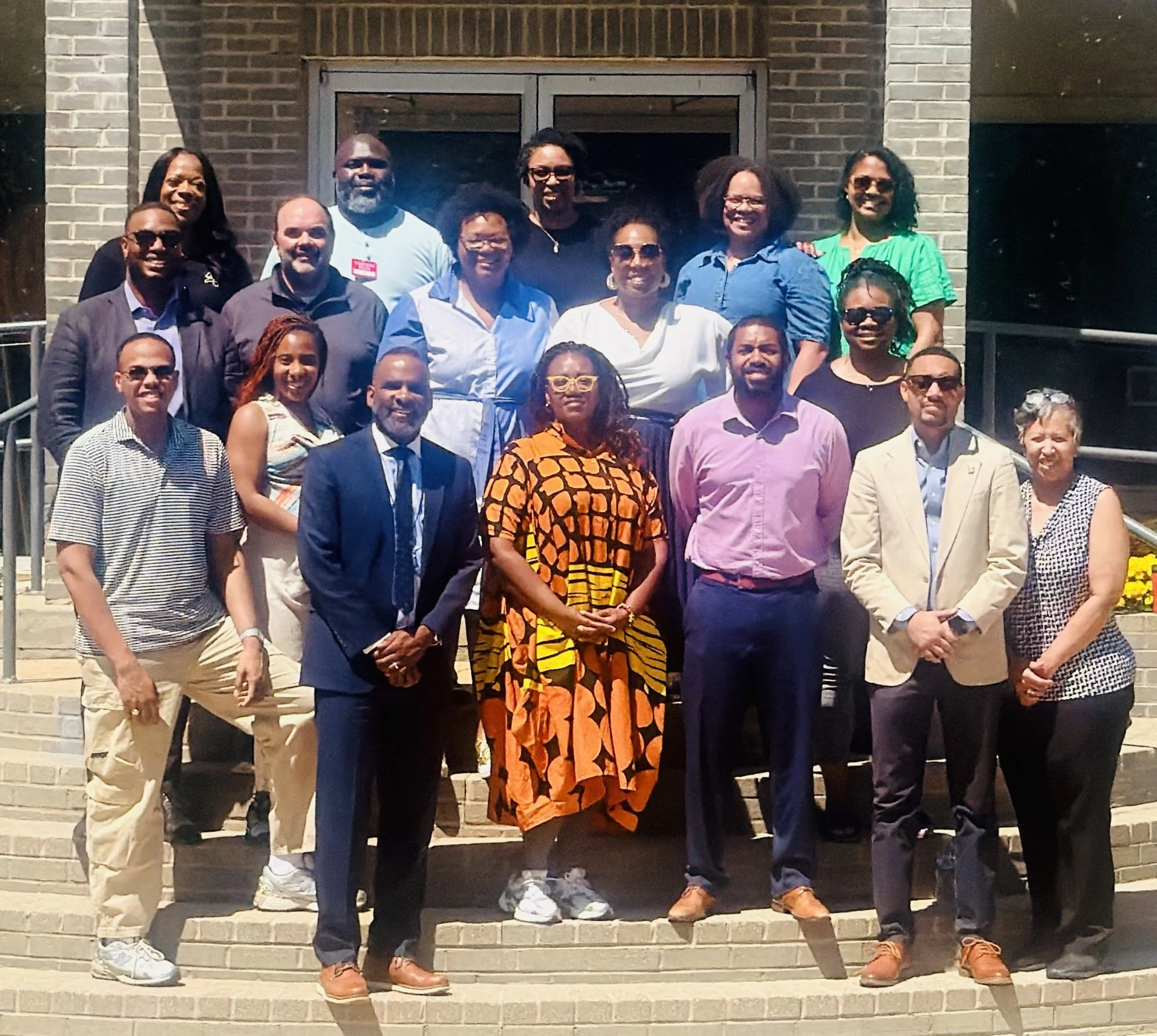
Last week, I joined EdChoice in Jackson, Mississippi, for a powerful fact-finding trip focused on educational choice, Black independent schools, and the future of learning for Black communities.
I left grateful.
I left challenged.
I left inspired.
There are some experiences that do more than inform you. They stretch you. They invite you to think more deeply about the systems we have inherited, the choices families deserve, and the kind of educational future we are responsible for building.
This was one of those experiences.
Our group came together from across the country, including North Carolina, Colorado, Wisconsin, Indiana, Georgia, Mississippi, New York, Washington, D.C., and beyond. Different states. Different perspectives. Different contexts. But one shared commitment connected us all: expanding access to high-quality educational opportunities for children and families.
Throughout the trip, we toured Black-led independent schools, engaged in honest community conversations, and witnessed what educational choice looks like when it is rooted in culture, identity, community, and possibility.
And that distinction matters.
Educational choice cannot simply be discussed as policy. For Black communities, education has always carried deeper meaning. It has been a site of resistance, liberation, formation, and legacy. It has been where identity is affirmed, dignity is protected, and futures are imagined beyond the limits others have tried to place on us.
That is what made this experience so powerful.
We were not simply visiting schools.
We were witnessing vision in motion.
We saw leaders building institutions with intention. We saw educators creating spaces where children are seen, known, challenged, and loved. We heard from communities working to ensure that families are not forced to choose between academic excellence and cultural affirmation.
They deserve both.
A major highlight was visiting The Piney Woods School. Founded in 1909, Piney Woods stands as one of the most historic Black boarding schools in the nation. Walking through that space was a reminder that Black educational excellence has never been accidental. It has always been intentional. It has always had to be protected. It has always required sacrifice, vision, and the courage to build when systems were not built for us.
Piney Woods is more than history.
It is testimony.

It reminds us that long before today’s policy debates, Black communities were already creating educational pathways for survival, excellence, leadership, and liberation. They were already asking what children needed to thrive. They were already building institutions that reflected the dignity and possibility of their people.
That legacy still matters.
And it should challenge us.
It should challenge how we think about access.
It should challenge how we define quality.
It should challenge whether our systems truly honor the needs, voices, and aspirations of families.
Educational choice is not just about where a child goes to school. It is about whether families have agency. It is about whether children have access to environments where they can flourish. It is about whether communities can build, sustain, and protect educational models that reflect their values, culture, and hopes for the future.
Educational choice is dignity.
It is agency.
It is legacy.
I am grateful to EdChoice for creating space to listen, learn, and reflect. I am grateful for the educators, school leaders, advocates, and community members who opened their doors and shared their stories. I am grateful for the reminder that the work of education is never just institutional. It is deeply personal, deeply communal, and deeply tied to the future we say we want for our children.
I left Jackson with more questions, deeper conviction, and a renewed sense of responsibility.
The work continues.
